

World of LEGO Artist Cecilie Fritzvold Hansen
Building Emotion Brick by Brick: The Creative
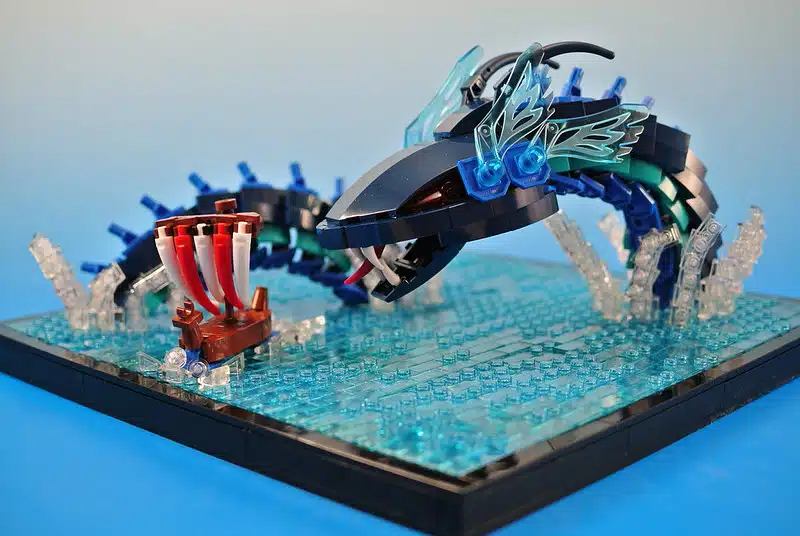
For Norwegian LEGO artist Cecilie Fritzvold Hansen, building is less about instructions and more about instinct. Her creations are not carefully mapped out through sketches or digital rendering software before the first brick is placed. Instead, they evolve organically through experimentation, visual exploration, and emotion. That process has helped her become one of the most respected builders in the AFOL community, known for highly expressive character work, dynamic movement, and visually striking displays inspired by anime, gaming, Japanese aesthetics, and personal experiences.
What makes Cecilie’s work stand out is not just technical skill, but the sense of feeling embedded within her models. Whether she is recreating a Pokémon character, designing a cinematic action pose, or building a street basketball scene inspired by her own life, her work consistently captures moments that feel alive. Her builds do not simply represent objects or characters. They communicate motion, energy, and atmosphere.
Starting With the Heart of the Build
Cecilie describes herself as a very hands-on builder. Unlike many contemporary LEGO artists who rely heavily on digital design tools, she prefers to work directly with physical bricks from the beginning. Her process typically starts by identifying the most visually important element of a model.
For character builds, that is often the face or head. For larger scenes, it might be the focal structure or centerpiece that defines the scale and color palette of the entire project. From there, the build grows naturally. Rather than following a rigid plan, she allows ideas to emerge as she works. Sometimes the first sections she builds are revisited later and completely reworked once the overall direction of the model becomes clearer. She explains that the early concept stage is the part she enjoys most because it is where creativity feels the most open and exciting. Finishing a model can actually become more difficult once the novelty of discovery fades and the more repetitive sections remain unfinished.Even so, she pushes through because the final result makes the effort worthwhile. Seeing the completed piece come together after hours of experimentation and revision provides a strong sense of satisfaction.
Drawing Inspiration From Beyond LEGO
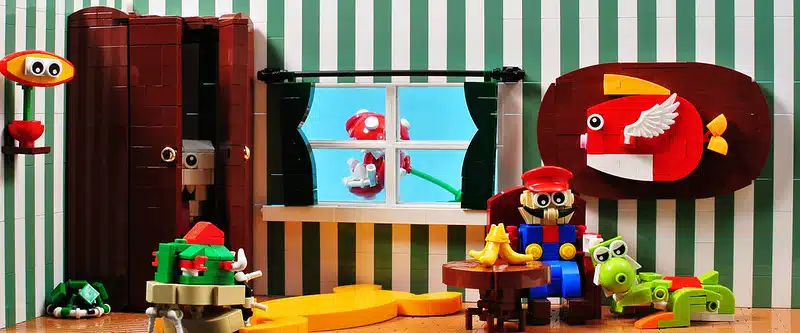
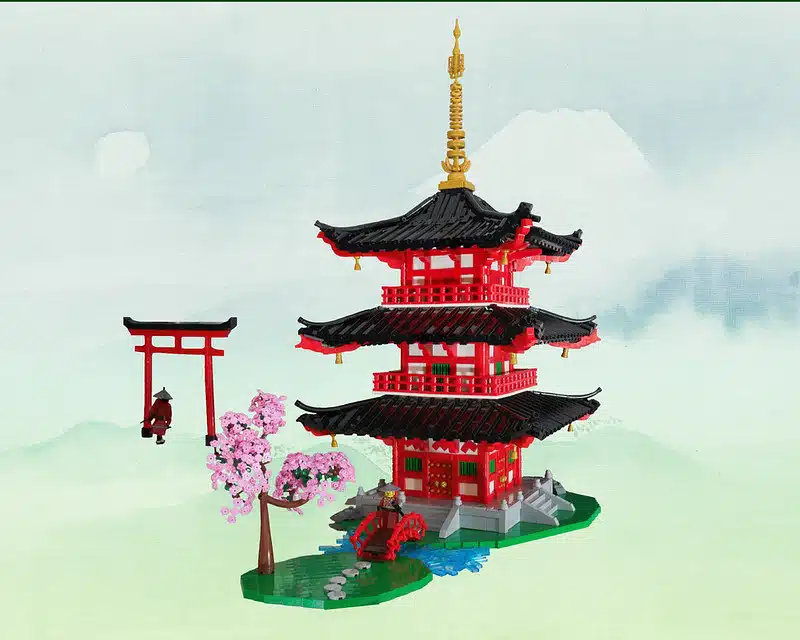
Cecilie’s creative influences extend far beyond the LEGO hobby itself. Much of her work is shaped by Japanese architecture and visual aesthetics, manga, anime, gaming culture, and films or television series she enjoys. Some builds directly reinterpret existing characters and franchises, while others borrow emotional tone, color language, or composition from those influences in more subtle ways.Her Mario-inspired Goomba build and several Pokémon creations are obvious examples of source translated into LEGO form. Other projects, such as her Ronin build, showcase a more atmospheric Japanese influence through posture, texture, and styling choices.
Translating those inspirations into LEGO, however, requires compromise. LEGO bricks have limitations, and Cecilie embraces the challenge of working within them. Rather than trying to replicate every detail perfectly, she focuses on capturing the defining characteristics that make the source instantly recognizable. That often means searching for unusual pieces, experimenting with unexpected techniques, or simplifying certain details while preserving the overall mood and identity of the subject.
Choosing Visual Impact Over Stability
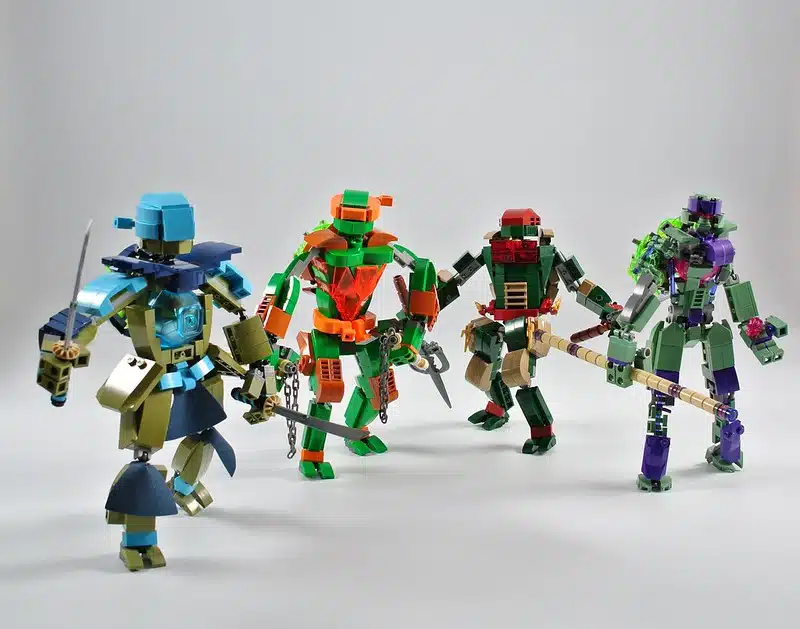
One of the most interesting aspects of Cecilie’s design philosophy is her unapologetic focus on visual impact over structural perfection. Many LEGO builders prioritize durability, stability, or playability. Cecilie openly admits that those are not her primary concerns. Her builds are designed first and foremost to look dramatic, expressive, and visually compelling. As a result, some of her creations are surprisingly fragile. Certain models barely hold together and can become difficult to transport or reassemble during conventions and exhibitions. Still, she accepts that tradeoff because the artistic result matters more to her than perfect engineering.
This often leads to a process where the outer shell or visual surface of a build is created first, with the internal support structure figured out afterward. In some cases, she has had to redesign portions of builds simply to make them physically possible to display. Although that approach can createfrustration during travel, she sees it as part of the creative process rather than a failure.
Capturing Emotion and Movement
While discussing storytelling in LEGO, Cecilie realized that she does not consciously approach her builds as narratives in the traditional sense. Instead, she focuses on emotion. Her goal is to create scenes that feel like frozen moments in time, full of movement and atmosphere.
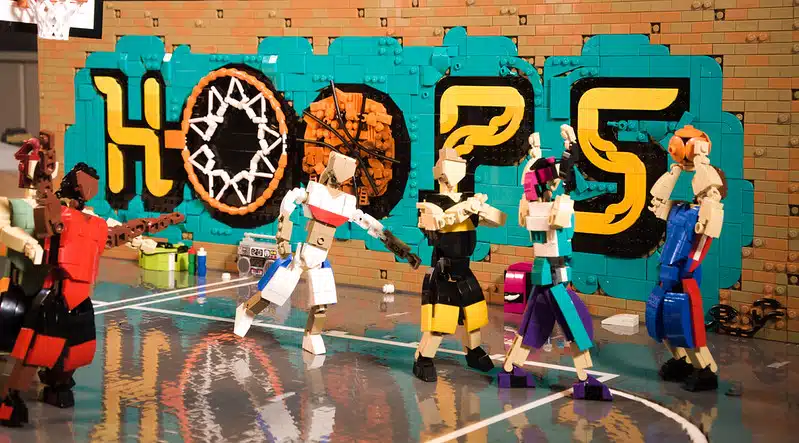
That philosophy is especially evident in one of the builds she feels most connected to personally: a detailed street basketball scene inspired by her own experience playing basketball since childhood.
Initially, she worried the subject matter might feel too niche for wider audiences within the LEGO community. Basketball is not a particularly common subject for large display models, especially compared to fantasy, sci-fi, or architecture builds.
To her surprise, the response was overwhelmingly positive. Viewers connected not just with the technical execution, but with the sense of movement and realism embedded within the scene. The build went on to win awards at multiple shows, proving to Cecilie that authenticity and emotional connection can resonate even with audiences unfamiliar with the source material itself. She believes that when she builds from subjects she genuinely loves, that passion naturally transfers into the final model and becomes visible to viewers.
Why Physical Bricks Still Matter
In an era where many builders design entirely in software before ever touching a brick, Cecilie remains firmly committed to physical building. Although she has experimented with programs like LEGO Digital Designer and Stud.io, digital workflows never felt comfortable or creatively satisfying to her.
Part of that preference comes from wanting a break from screens. Since working at a computer is already part of daily life for many adults, building physically offers a more tactile and relaxing creative outlet. More importantly, she feels digital building changes the creative dynamic in ways she does not enjoy.
Working with physical pieces forces builders to respond to real limitations. The available parts, colors, and quantities shape the design in real time. Cecilie enjoys solving those constraints as part of the artistic challenge. Digital building, on the other hand, can remove those limitations entirely, leading todesigns that may later require expensive BrickLink orders or feel disconnected from the physical experience of building. For her, discovery happens through physically handling pieces and experimenting spontaneously, not by staring at a digital render on a screen.
Representation and Visibility in the LEGO Community
When Cecilie first joined a LEGO User Group in Norway in 2010, the community was overwhelmingly male. Over time, she has seen a noticeable increase in women and non-male builders participating in conventions, collaborations, and competitions. While LEGO fandom still remains male dominated in many spaces, she believes the growing diversity has positively influenced both the community culture and the types of builds being created.
Personally, Cecilie says she has generally felt respected and welcomed within the LEGO community.However, conversations with newer women builders have made her realize the importance of visibility and representation. Several women have told her they viewed her as someone who helped make the hobby feel more accessible and welcoming. That realization became particularly meaningful because Cecilie never originally set out to become a role model. Hearing that her presence encouraged others to participate has become one of the most empowering aspects of her LEGO journey.
One especially important milestone came when she was invited to compete in Iron Builder, one of the LEGO community’s most prestigious design competitions. Cecilie became the first woman to compete solo in the competition and ultimately went on to win. The experience gave her a major confidence boost and reinforced her belief in her own creative voice.
Advice for the Next Generation
For aspiring LEGO designers, especially young women entering creative or technical spaces, Cecilie’s advice centers around confidence and participation. She encourages builders not to wait until they feel fully skilled or experienced before sharing their work publicly.
In her view, growth only comes through experimentation, failure, and repetition. There is no shortcut to developing creative skill, and mistakes are simply part of the learning process.She also strongly encourages new builders to attend conventions and display their creations, even if they feel intimidated. Bringing a MOC to a show often becomes an instant conversation starter and a gateway into the community itself.
Beyond online tutorials and building resources like Tips&Bricks;, Cecilie believes the most valuable part of the hobby remains the people. Collaboration, encouragement, and seeing other builders’ work in person continue to shape how creators grow and evolve over time.
Looking Ahead
As LEGO continues expanding its themes and audiences, Cecilie hopes to see more anime-inspired sets and storytelling represented officially. While recent announcements like One Piece sets are encouraging, she believes there are still many genres and communities that LEGO has barely explored.
At the same time, her own work continues to push LEGO beyond traditional expectations. Her builds are not focused on play features or commercial polish. Instead, they prioritize emotion, movement,artistic expression, and atmosphere.
That commitment to visual storytelling is ultimately what defines Cecilie’s creative identity. Every build becomes an attempt to capture a feeling and preserve a fleeting moment in brick form.
All images courtesy of Cecilie’s Flickr page.