
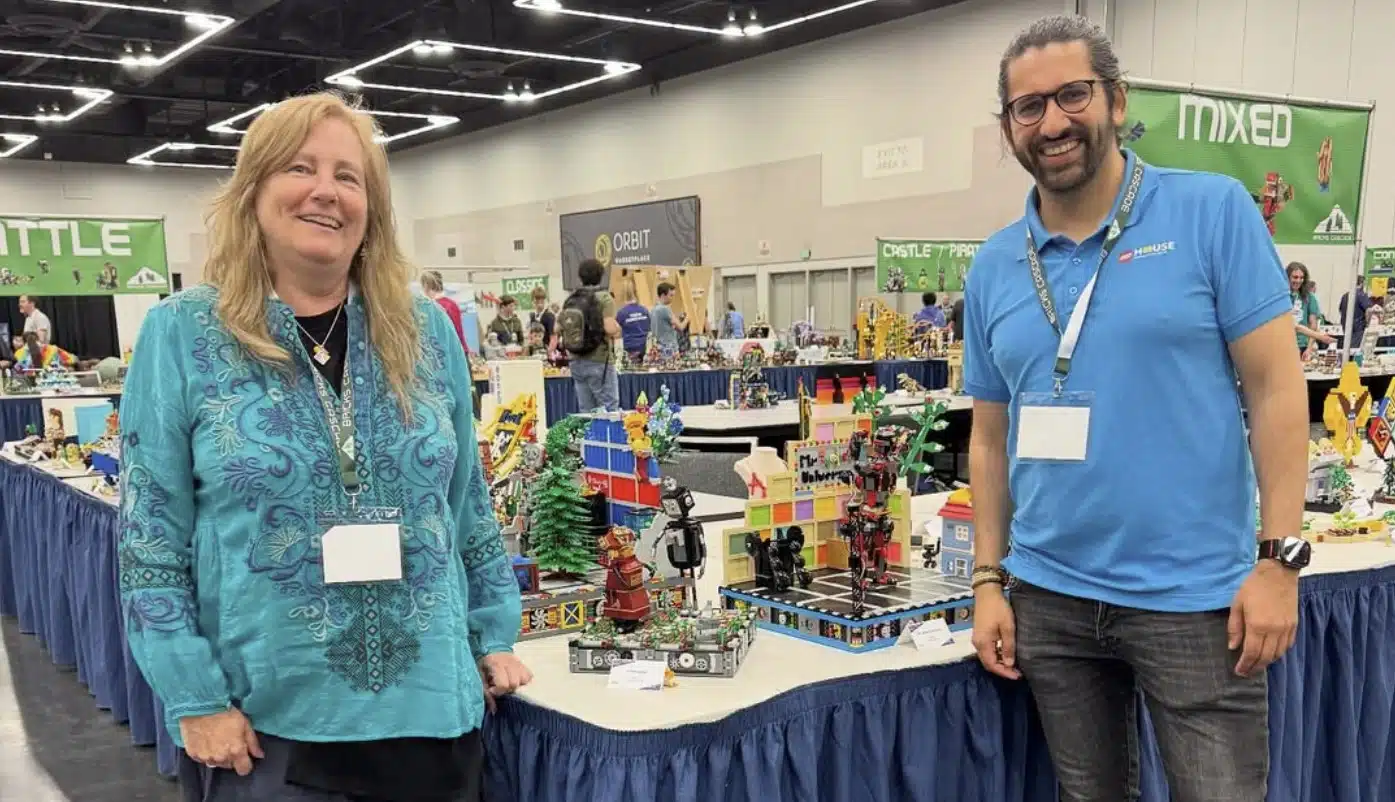
Pamela Henry does not begin with a blueprint. There is no software open, no digital rendering mapped out in advance, and no rigid plan dictating where each piece should go. Instead, she starts with something far less structured and far more personal. A feeling. An idea. A story waiting to take shape.
“I like to call myself an organic builder,” she says. “I have a basic idea in my head and I usually just start building.”
That instinct-driven approach might sound unconventional in a space where precision and planning often dominate, but it has become her defining strength. It is also what helped carry her work to one of the most prestigious stages in the LEGO world, the Masterpiece Gallery in Billund, Denmark. For Pamela, building is not about control. It is about discovery.
An Organic Creative Process
Pamela does not always know how a model will come together when she begins. In fact, she prefers it that way. The uncertainty is part of the process, the tension between not knowing and figuring it out piece by piece.
“I generally have no idea how I will build something when I first start,” she explains. “That can be challenging, but it is also really rewarding when I figure out how to pull it off.”
Over time, her process has evolved. Not toward more planning, but toward smarter decision-making. Experience has taught her where to focus her energy. She now prototypes the most difficult parts first, solving complex problems early and allowing the rest of the build to grow around them. It is a subtle shift, but one that reflects a deeper understanding of how she works best.
Inspiration Without Boundaries
Her creative influences move fluidly across disciplines. Architecture, natural forms, and film all inform her work depending on the project. One build inspired by Star Wars pushed that process further. What began as a simple idea turned into a deeper investigation. Screenshots from the film were not enough, so Pamela and her son searched for original 3D renderings of the structure they wanted to recreate.
“That helped us so much to make the building look realistic,” she says. “As real as using plastic bricks can be.” For her , realism is not about perfect replication. It is about suggestions. It is about using pieces in unexpected ways to imply detail, texture, and depth. Unlike many builders, she prioritizes aesthetics over playability.
“With the exception of a LEGO-built board game I made last year, I do not usually build for playability,” she says. “It is primarily about aesthetics.” Her work is meant to be experienced visually. The goal is impact, not interaction. Knowing when a build is finished is not a technical decision. It is instinctual. “If time is not a factor, I build until I have a real gut feeling that it is done.”
Story as the Foundation
At the center of every build is a story. “Having a good story is key for me,” she says. “It informs my entire process from planning to building.” That story may evolve along the way. An unexpected idea or breakthrough can shift the direction of a build, often improving it in ways she did not anticipate. The storytelling is not always obvious. It often lives in the details, small elements that invite viewers to look closer and engage more deeply with the work. Pamela’s growth as a builder has come through years of hands-on experimentation rather than formal training or digital tools.
“I think part knowledge and understanding piece usage has been key,” she says. “And learning to listen to my intuition.” She began building alongside her son, an experience that shaped both her technical skills and creative perspective. Over time, she refined her approach to structure as well. On one early large-scale project, she overbuilt the internal framework, making it unnecessarily heavy. That experience changed how she builds.
“A little goes a long way,” she says, While she primarily builds for herself, constraints still play a role. Part availability, color limitations, and cost can all influence a build. “It can be frustrating to realize a part you really want does not come in the color you need,” she says. Rather than seeing constraints as limitations, she uses them as creative prompts. She often revisits her collection, opening drawers and rediscovering pieces that inspire new ideas.
Navigating Gender Bias and Representation
Pamela is direct about her experiences as a woman in the LEGO design space.
“People used to say things like, ‘Oh, but your son built everything, right?’” she recalls.
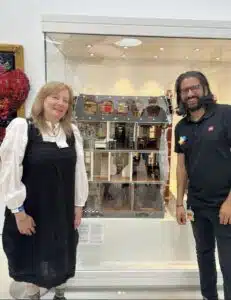
She has been overlooked in interviews and faced dismissive comments online. Even when building independently, she was often questioned about whether the work was truly hers. While she acknowledges progress over time, she believes there is still more to be done. Support from respected builders and a stronger belief in her own work have made a meaningful difference. One of her most impactful experiences came from a build she created with her son. They designed an Arabian-themed MOC featuring a bazaar, castle, and mosque.A visitor approached her and shared that it was the first time he had seen himself reflected in LEGO. “Representation matters,” she says. Moments like that reinforce the idea that LEGO is more than a creative medium. It is a space where identity, culture, and personal stories can be seen and shared. One of her most meaningful projects was also one of her least understood. She created a model inspired by a donut shop from her childhood, complete with detailed elements from the 1970s, including a cigarette vending machine.
“People did not get it,” she says. “But I still love it.” That project marked a turning point.“That was the first time I said I am building what I want for myself.”
Advice for Aspiring Designers
Her advice is simple and direct. “Start small and build what you like.” She encourages beginners not to worry about external validation. “If it is your first MOC, you cannot worry whether others will like it. Just go for it.” She also recommends engaging with local LEGO User Groups and experimenting with existing sets as a starting point.Pamela believes LEGO still has room to grow, especially in terms of diversity and original themes.
“Lego used to have more themes not based on media IP,” she says. “I think moving away from that limits kids’ ability to dream and create their own ideas.” At the same time, she continues to imagine new possibilities for her own work. Her dream project is ambitious and cinematic.“A whole Wes Anderson movie theme.”. For Pamela, LEGO design is not about perfection or rigid technique. It is about perspective. “We all put our own spin on the things we build,” she says. Her work reflects that belief. It is intuitive, personal, and grounded in storytelling. Sometimes the most meaningful builds do not start with a plan. They start with a feeling and the willingness to follow it wherever it leads.