
What happens when diversity begins to disappear from a company’s language while remaining highly visible in its product?
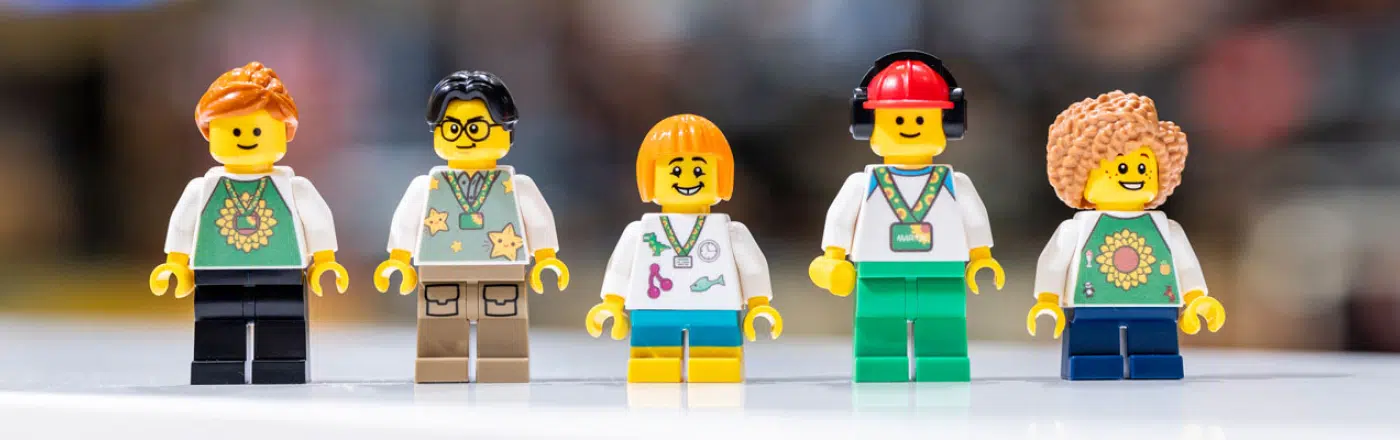
In recent years, the LEGO Group has increasingly presented itself as a company committed to building a more inclusive world through play. The LEGO Group not only introduced the world’s first toys to feature the official Sunflower lanyard, it has also joined the Hidden Disabilities Sunflower to support and celebrate fans and colleagues with disabilities, conditions, and sensory needs that aren’t immediately apparent [1]. Yet a preliminary comparison of its annual and sustainability reports suggests that explicit references to terms such as “diversity”, “LGBTQIA+”, and “People of Color” became noticeably less frequent in 2024 [2]. Words alone cannot tell us whether LEGO’s commitment to inclusion has changed. Still, language matters. The words a company chooses, or chooses not to use, reflect how the company publicly defines its priorities and identifies the communities it intends to support.
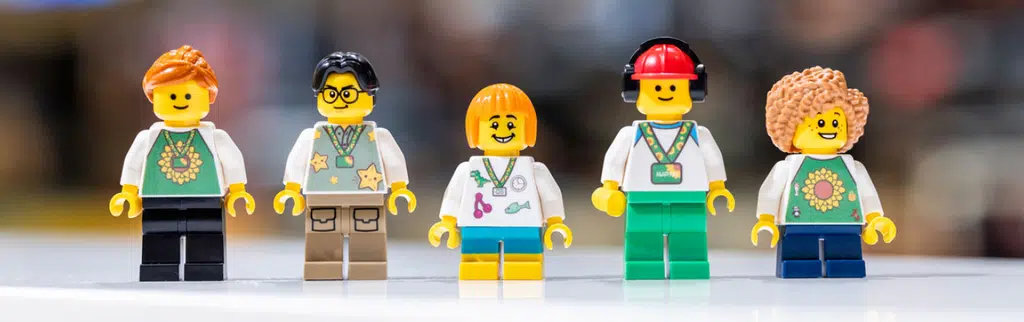
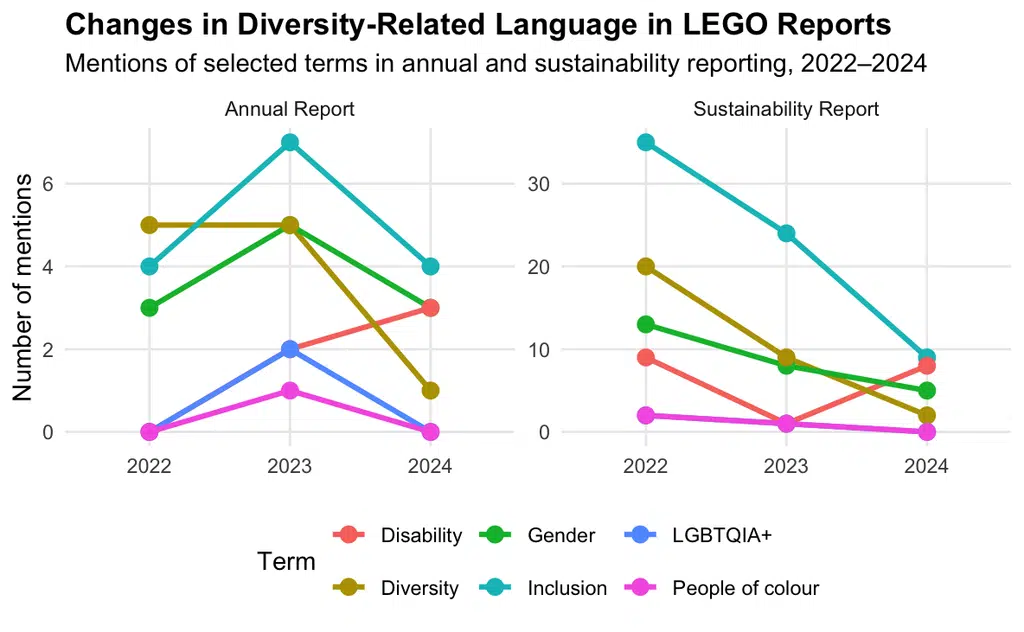
Figure 1: Changes in Diversity-Related Language in LEGO Report
LEGO did not stop working on inclusion-related work. On the contrary its recent disability initiatives demonstrate that inclusion remains present in both its products and workplace commitments. However, the decline of broader corporate diversity language could make the inclusion visibility more selective. Rather than asking whether LEGO is inclusive, we should ask a more specific question: whose inclusion is being made visible, and whose is becoming harder to name?
When Diversity Becomes Less Visible: Representation Within and Beyond Corporate Language
Toys are not neutral. Playing LEGO sets can frame how children perceive the communities they live in. The minifigures can shape how they understand who is allowed to become a hero, a scientist, an architect, a parent, or a participant in cultural traditions. Specific themed LEGO collections also influence which families, communities, and cultures children learn to view as familiar, valuable, and worthy of being represented.
The decline of explicit diversity-related language in corporate reporting matters beyond wording of the reports themselves. Corporate language often reflects how a company defines its strategic priorities, responds to the market pressures, and decides which communities or issues to recognize publicly. A reduction in a broad diversity language signals a more selective approach to visibility, in which certain identities, initiatives, or communities receive greater attention while others become less explicitly named. This selectivity can also appear in the products a company chooses to promote. When particular cultures are regularly represented through sets, characters, and celebrations, they gain visibility in the worlds children are invited to build.
LEGO’s Lunar New Year collection is a representative case through which to examine the tension between cultural visibility and meaningful representation.
Visibility, Marketability, and Cultural Specificity
LEGO’s Lunar New Year sets matter because they represent more than the addition of a seasonal theme. The line started in 2013 with the individual zodiac LEGO set, and in 2019 released the first Chinese Festival set [3]. These sets mark an important shift in LEGO’s relationship with Asian consumers, and in the kinds of cultural stories the company considers worthy of turning into play.
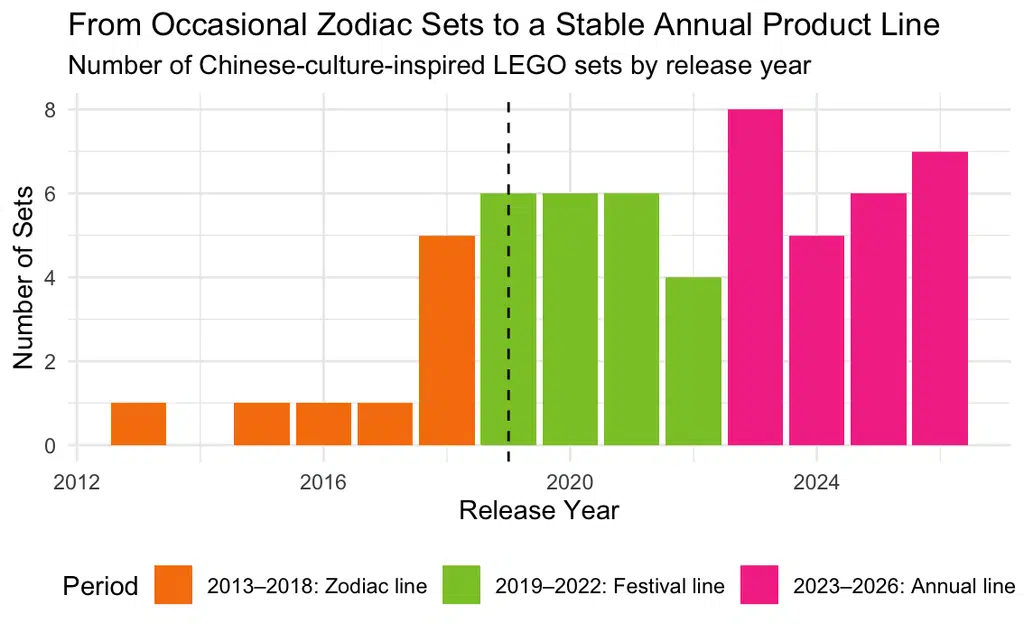
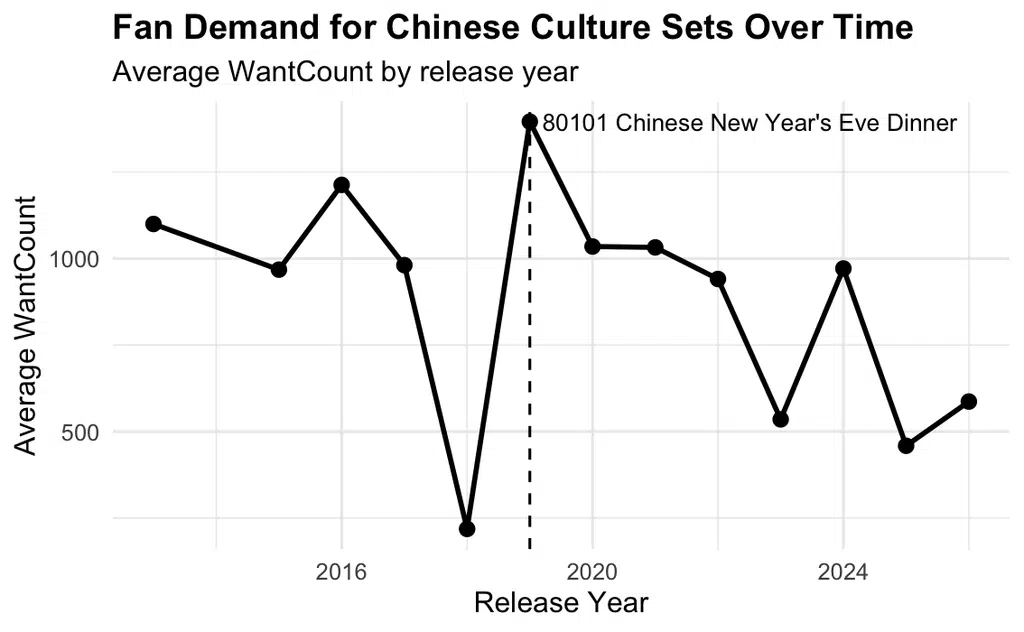
Figure 2: Chinese Culture Inspired LEGO sets by release year
Set 80101 Chinese New Year’s Eve Dinner is especially worth closer attention. Earlier zodiac-themed produced introduced recognizable symbols of the Chinese New Year, but the release of Chinese New Year’s Eve Dinner in 2019 moved beyond a single animal or decorative object. It presented the festival as a lived family experience, built around reunion, food, home, and intergenerational connection. [add figure]
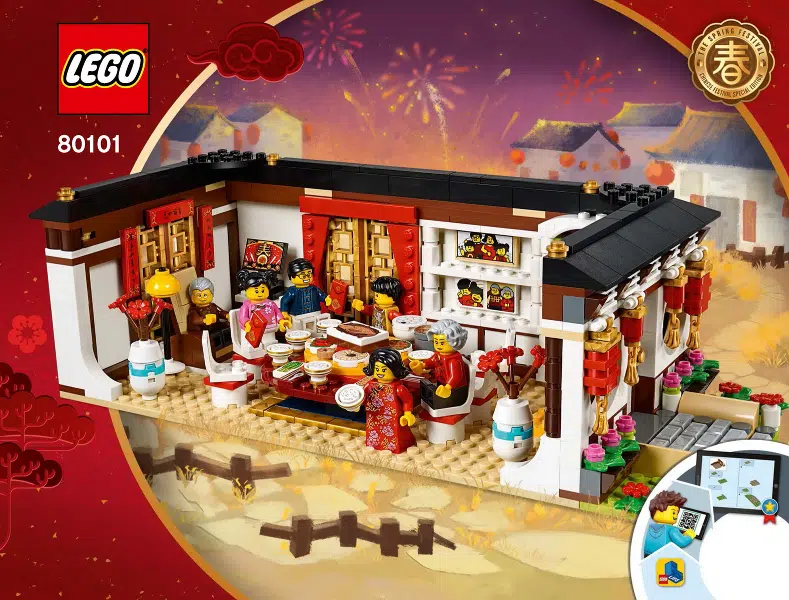
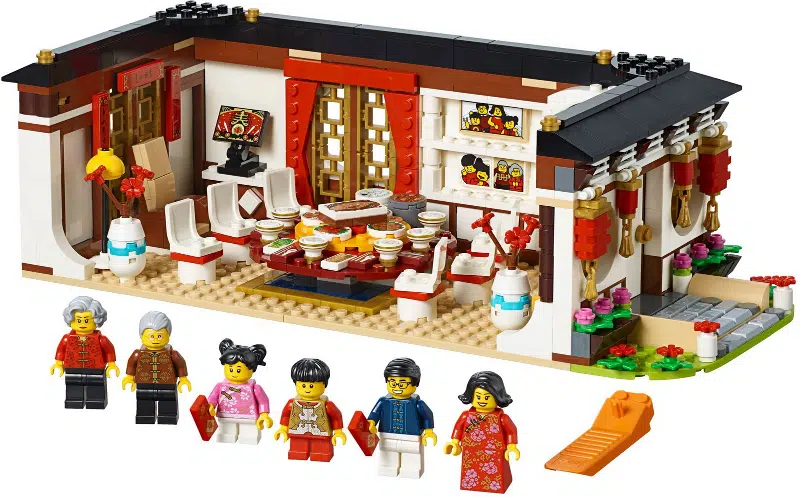
(80101 Chinese New Year’s Eve Dinner)
Rather than relying only on red and gold as general signs of celebration, the design includes more authentic and detailed traditions: an upside-down “Fu” decoration at the entrance, a television showing the Spring Festival Gala, and carefully printed clothing and facial figures. These details make the set recognizable not simply as a generic festival, but as a scene connection to everyday Chinese cultural memory.
As someone who grew up in mainland China, this set reminded me of my own experience of celebrating Spring Festival with my own family as a child: the decorations, the television in the background, the food, and the feeling of gathering at home. This sense of recognition matters. In this set, Chinese culture is not only displayed as a decorative theme; it is made tangible, personal, and playable.
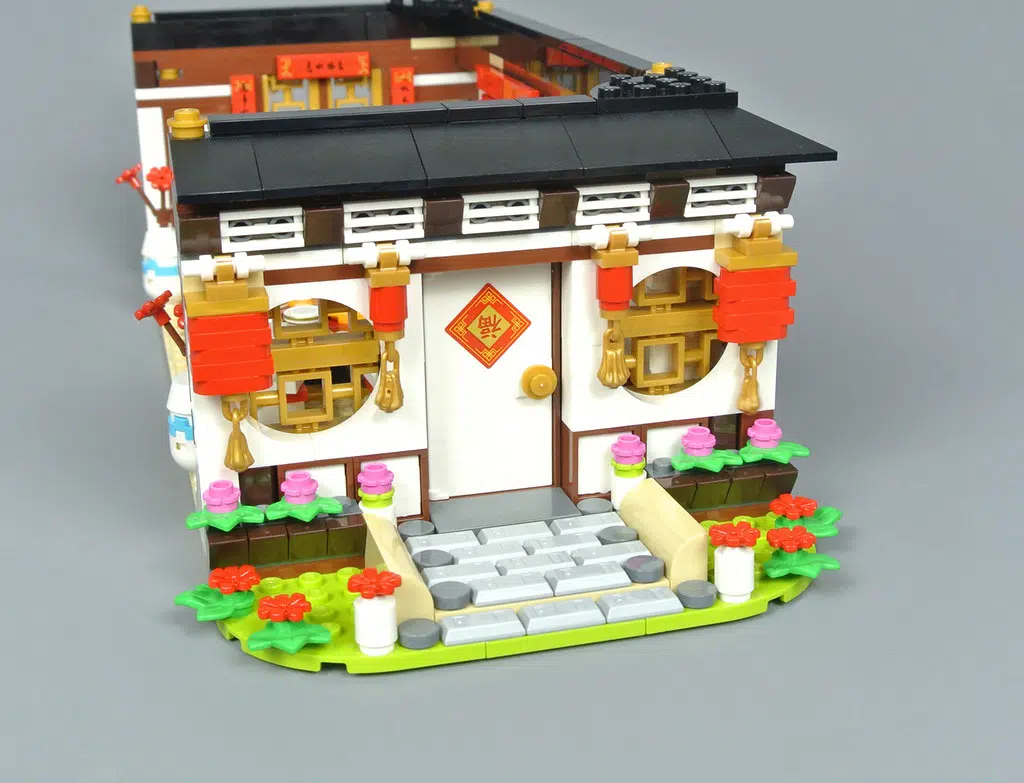
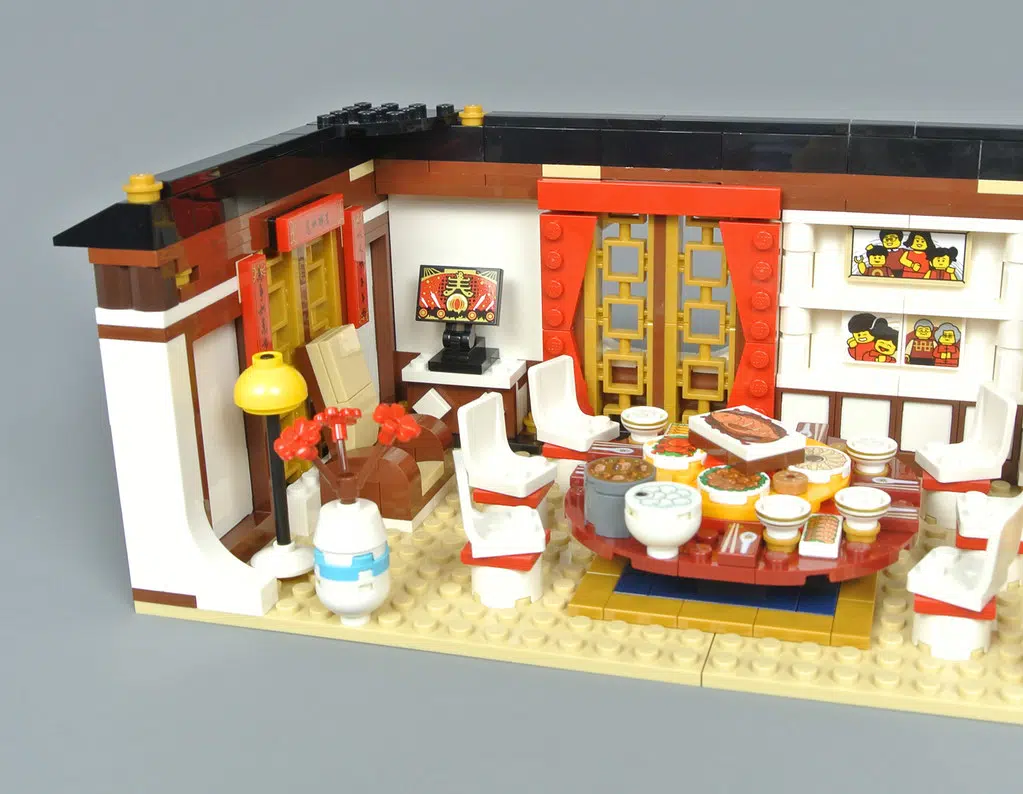
(Left: Exterior design; Right: Interior design)
Marketability
The set 80101 Chinese New Year’s Eve Dinner ‘s initial release was limited to the Asia-Pacific region. Yet fan interest was clearly not limited to Asia-Pacific. In my dataset, 80101 has a WantCount of 2,694, one of the highest among the Chinese-culture-inspired sets. While the set made Chinese cultural traditions visible within LEGO’s product line, restricting its availability to a regional market also limited the visibility of the consumer elsewhere.
In the earlier years, LEGO sets related to Chinese culture were often small promotional items, limited releases, or regionally difficult to access. Regular retail availability was almost absent from 2013 to 2018. That began to change later: by 2023-2026, 10 sets in the dataset were listed as retail releases. In other words, LEGO’s Chinese cultural sets did not just become more detailed over time; they also became easier to encounter in local LEGO stores.
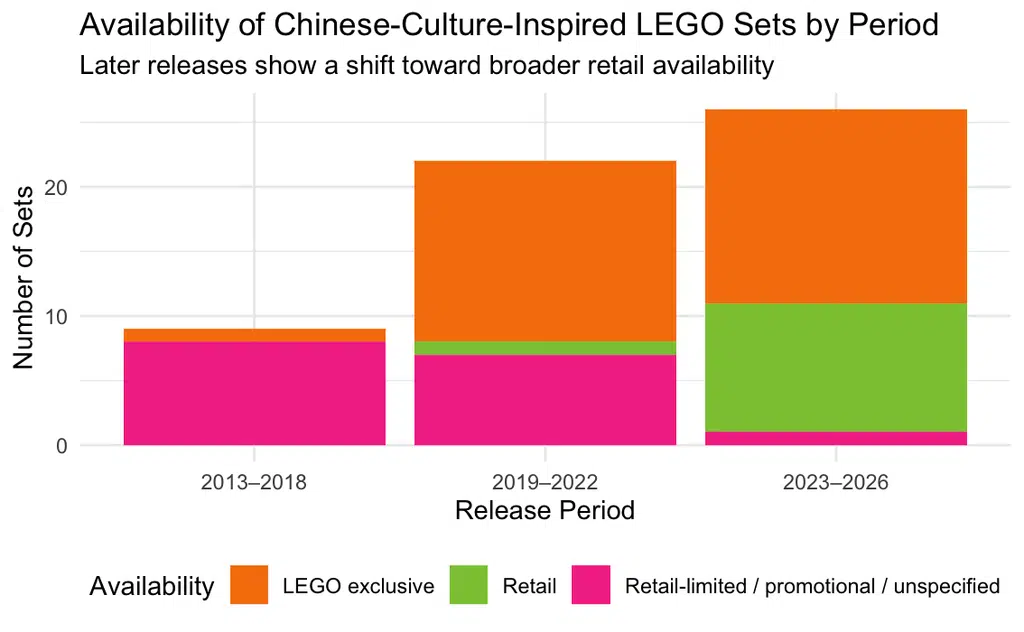
This change matters. A culture can be beautifully represented in a set, but if the set is hard to find, the representation stays partly hidden. For a Lunar New Year set, wider availability means more than convenience for collectors. It means more children, families, and fans can meet the celebration through play.
From Celebration to Belonging
Later sets expanded the meaning of the New Year Festival representation. The set 80108 Lunar New Year Traditions Set, for example, divides the celebration into several small scenes that families can play around with the bricks together. The design emphasizes “tuanyuan” (团圆) – reunion and togetherness – not only through the activities depicted, but also through the building experience itself. Separated models and instructions allow several people to participate at once, turning the set into an intergenerational activity. This creative playing method expanded the meaning of Lunar New Year representation by incorporating lived traditions rather than presenting the holiday as a spectacle for outside observers: the celebration is created collectively rather than individually. I think this also touched on the core of the Spring Festival celebration spirit.
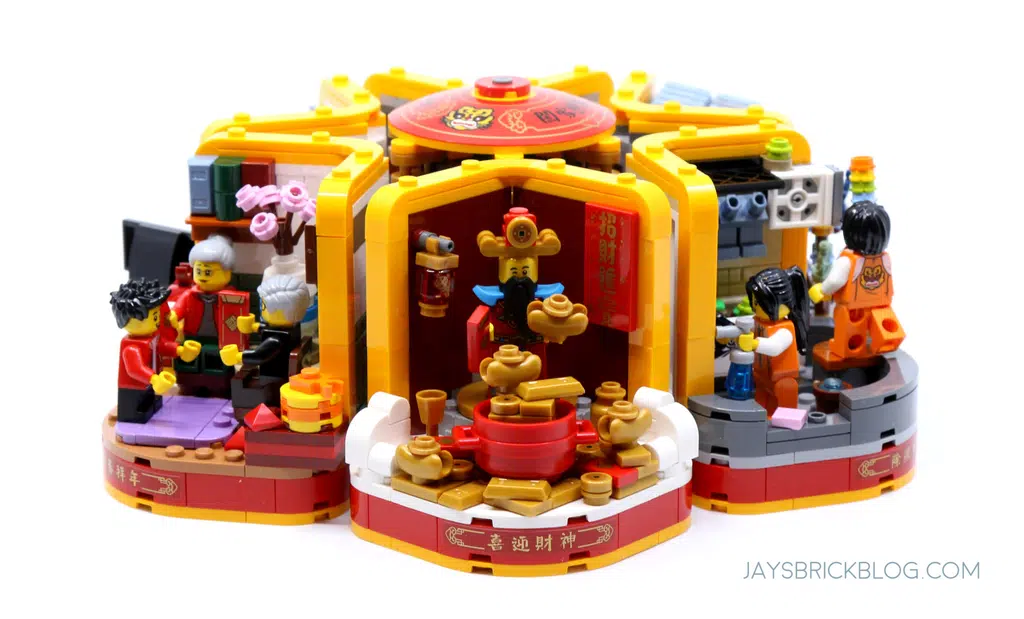
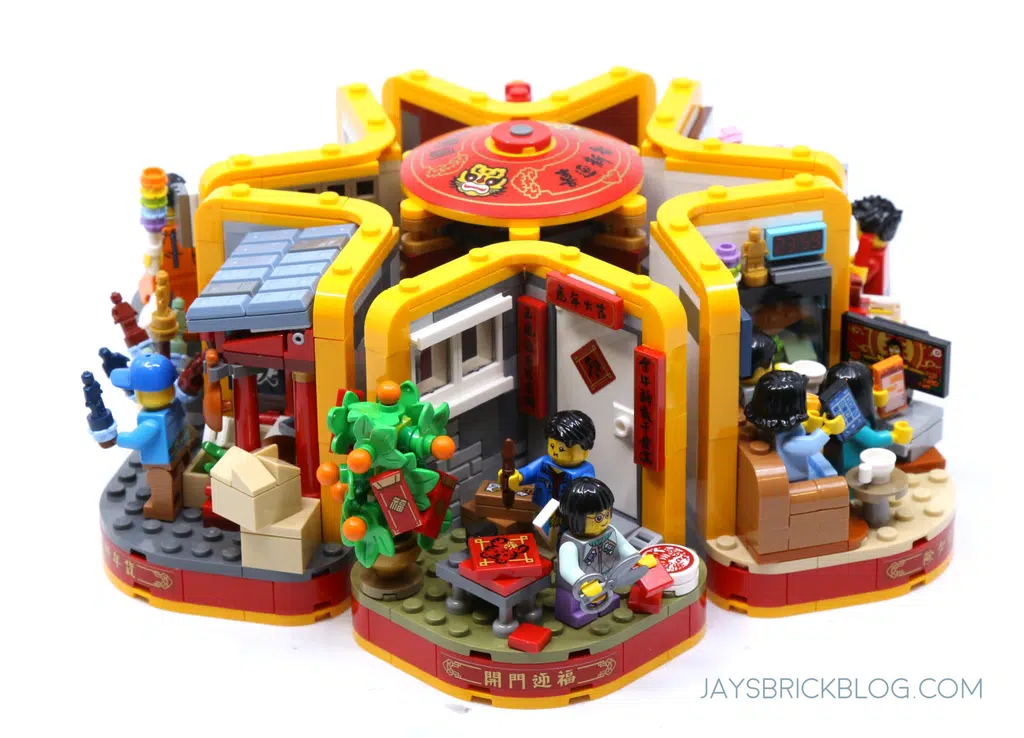
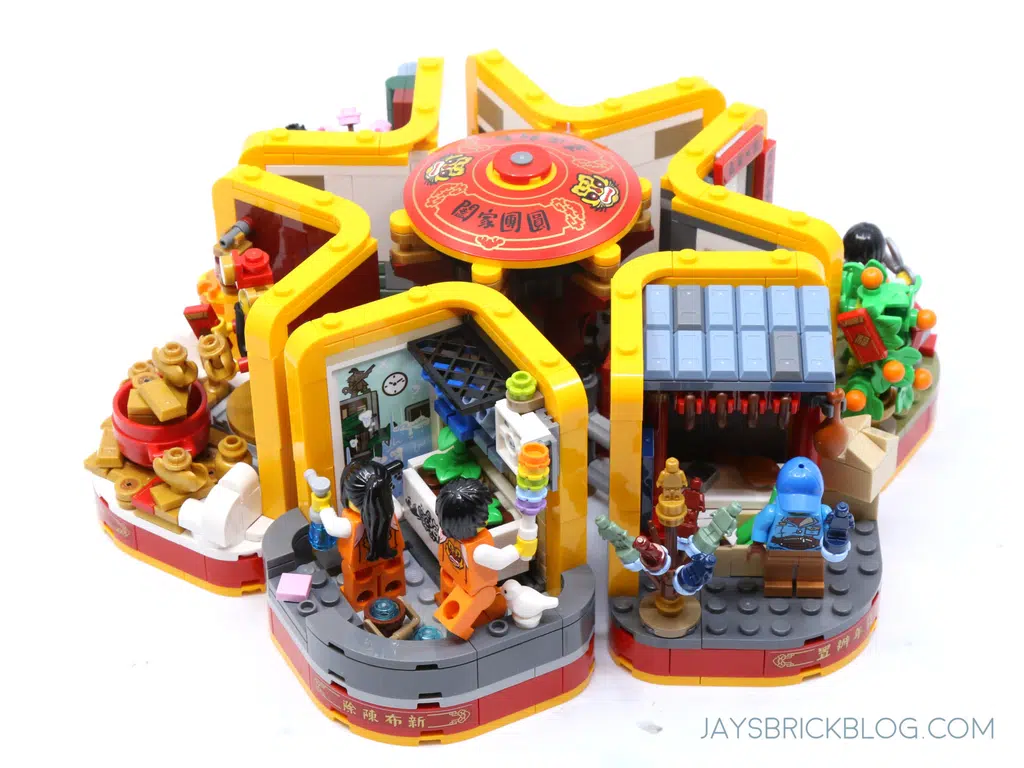
These sets also have a strong educational power. Children who are unfamiliar with Lunar New Year encounter customs, foods, family relationships, clothing, decorations, and symbolic meanings through building the bricks rather than taking the informational input lessons. For children from Chinese and other Asian communities, the sets build conversation with their relatives about how their own families celebrate. LEGO, in this case, does not merely display cultural objects; at its best, it provides an entertaining structure through which children can ask where specific elements on the bricks or stickers come from, connecting to their actual real-life meanings and how families preserve them.
At the same time, the evolution of the collection raises questions about the relationship between cultural specificity and global appeal. Sets such as Lunar New Year Parade present scenes that can be recognized by people celebrating the holiday in many different countries, including China, Singapore, Vietnam, South Korea, and Malaysia. The parade does not belong clearly to one regional tradition; instead, the floats, dancers, musicians, zodiac imagery, and public festivities resemble Lunar New year celebrations staged by Asian diasporic communities around the world. This broader presentation allows more consumers to see themselves in the scenes and makes the product accessible beyond the Chinese market.
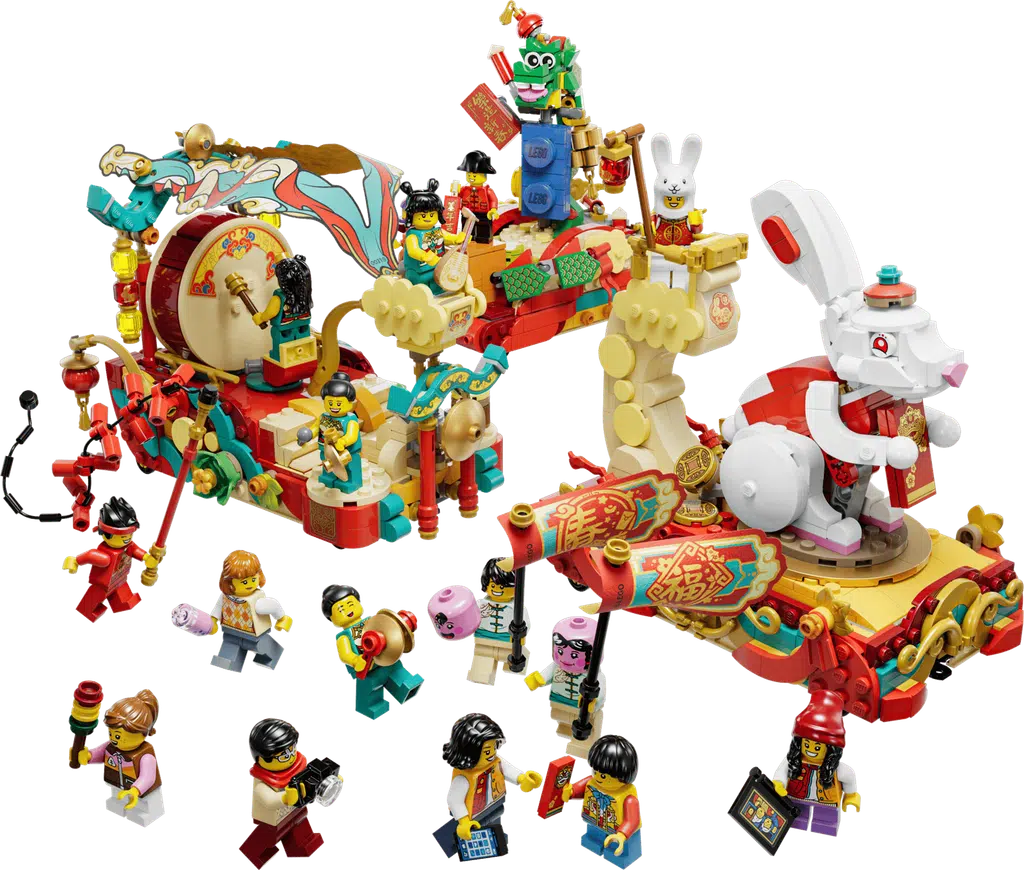
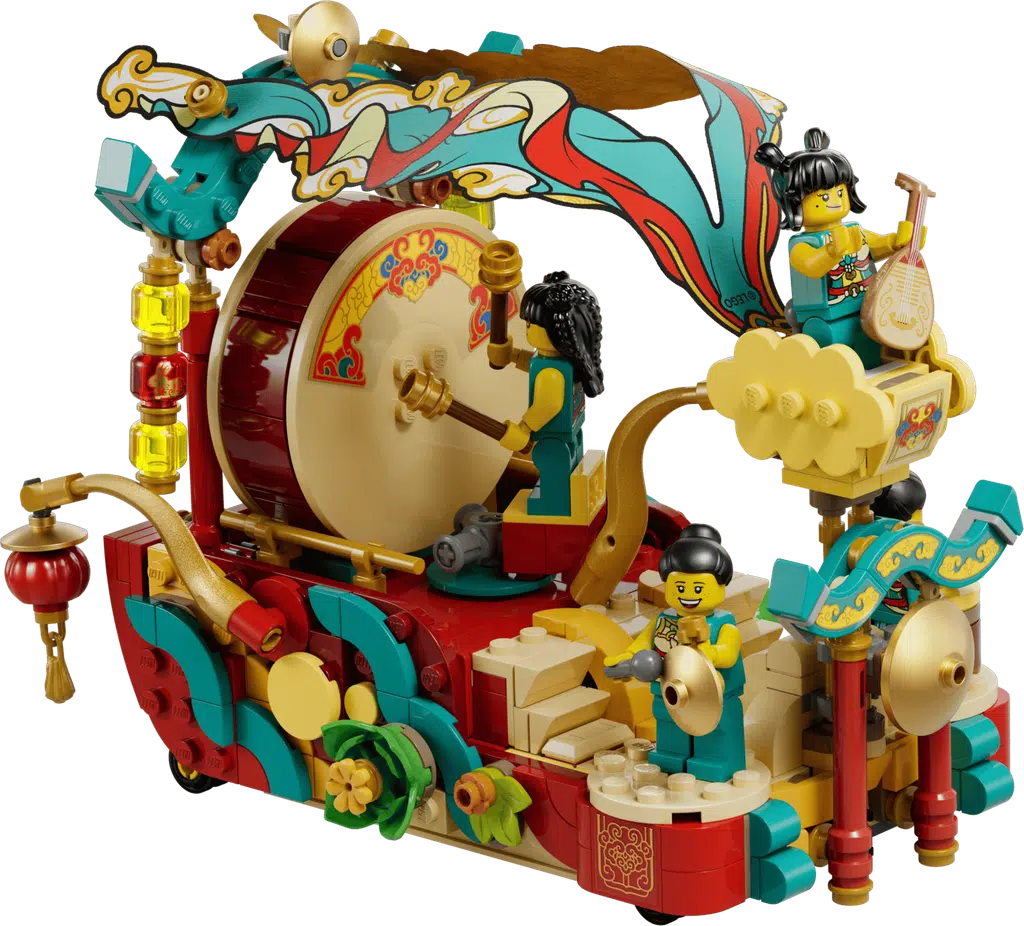
The Lunar New Year collections are definitely an important case for examining representation. They demonstrate the capacity of LEGO to make Asian cultures visible in a global toy market, to introduce cultural knowledge through playing. But they also show that visibility is only the beginning. Meaningful representation depends on whose experiences inform the design, how much cultural specificity is preserved, and whether a community is presented as a living and internally diverse group rather than as a collection of attractive symbols. The question is therefore not simply whether Asian culture appears in LEGO products, but what kind of Asian culture is made visible, for whom it is designed, and whose experiences remain outside the frame.
Notes:
Room for improvement (Wakanda set, new sets of diff cultures – e.g. lunar new year sets)
It might be different results when sets are based on movies or cultural realism (Monkie kid and Ninjago both being original animations)
Not just repetitive heads but what are the unique heads that are only used in the context of that culture. What sets it apart from other heads?