

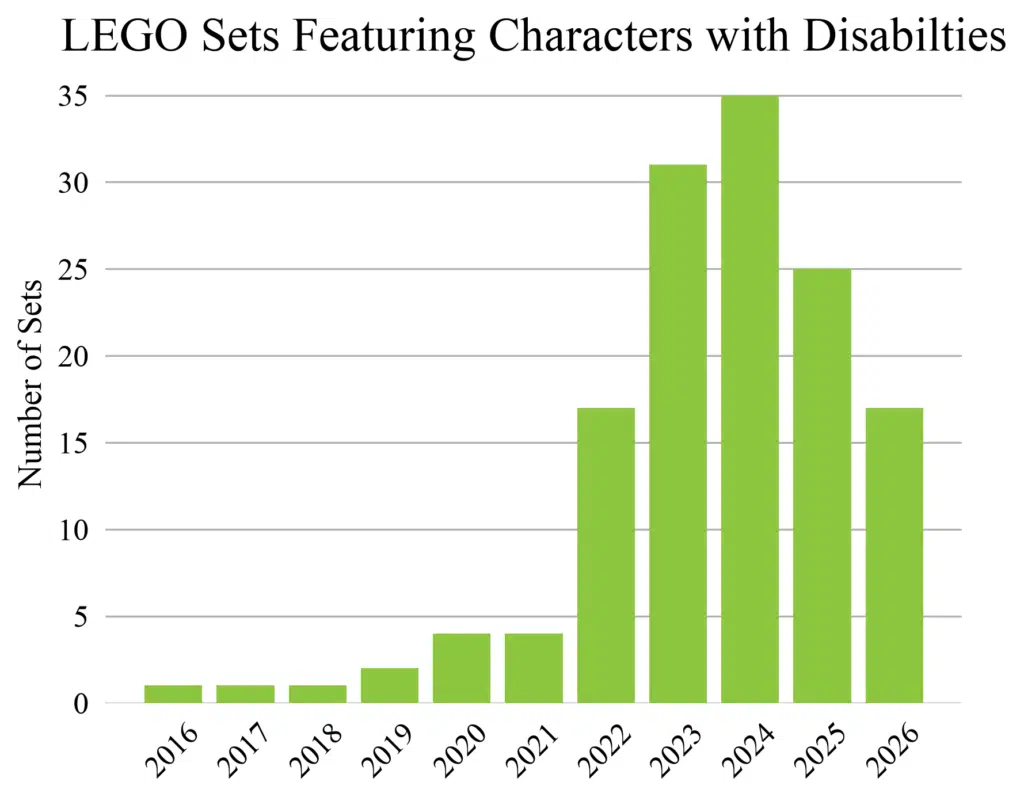
In honor of Disability Pride Month, we are celebrating LEGO’s expansion of disability representation across sets and minifigures. UNICEF estimates that around 1 in 10 children globally have a moderate to severe disability, and these millions of children should be able to see themselves in the toys they play with. LEGO has recently made a resounding effort to emphasize disability representation in their sets: over the past five years, the number of sets featuring minifigures or minidolls with disabilities has increased 942% from the five years prior.
When collecting our data, we decided to limit our research to instances of modern disability representation. Therefore, we did not include characters with peg legs, hook hands, or similar afflictions. We did include modern representations of disability present in fantasy sets, such as several wheelchair users in Wicked and Harry Potter sets. Additionally, we limited our search to permanent disabilities, excluding clear temporary impairments such as Clumsy Guy, a Collectible Minifigure with a bandaged ankle using crutches.
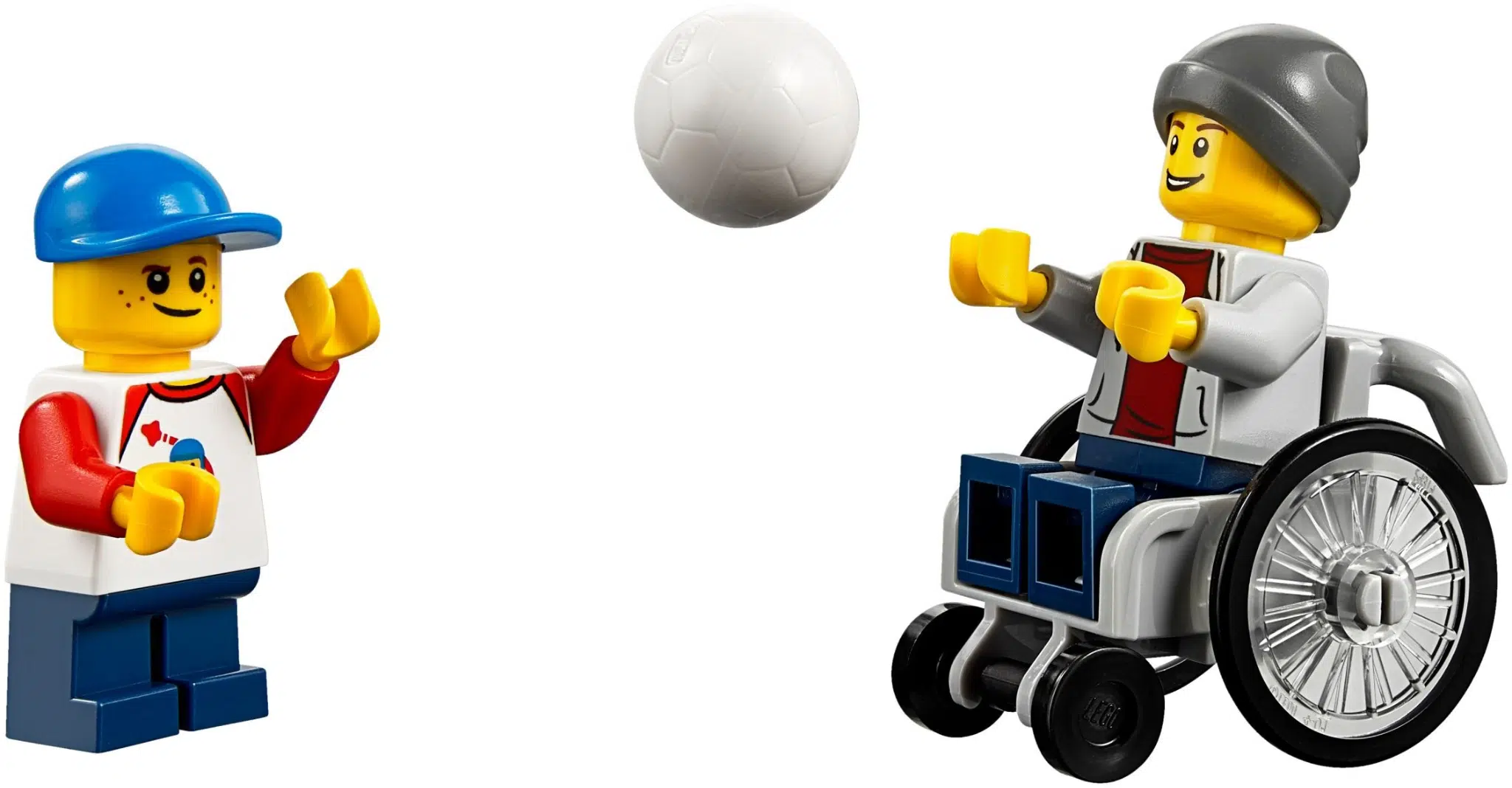
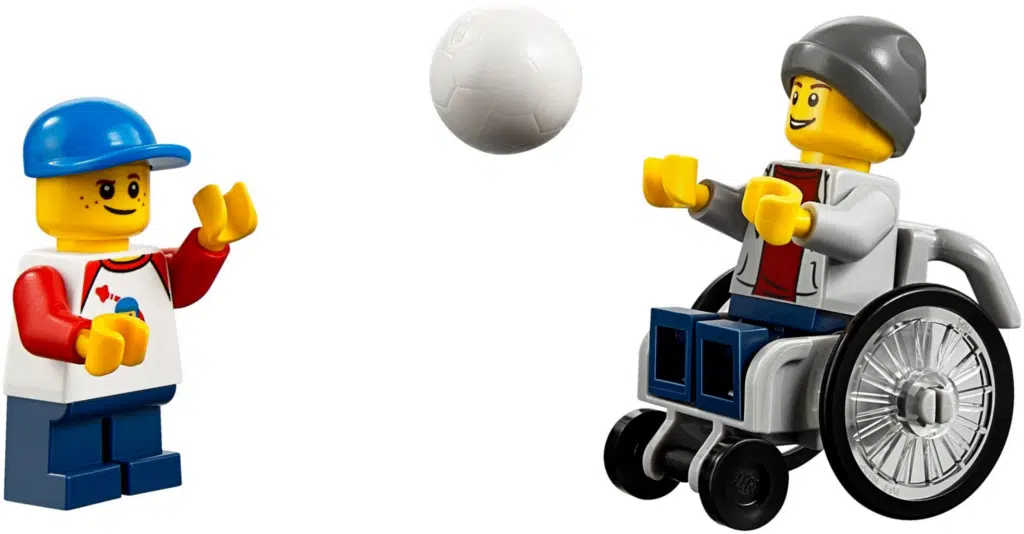
Looking back, the first instance of disability representation that we found was in the 60134 People Pack – Fun in the Park set. Released in 2016, this set features a male minifigure in a wheelchair. To this day, wheelchair users are one of the most represented disabilities in LEGO.
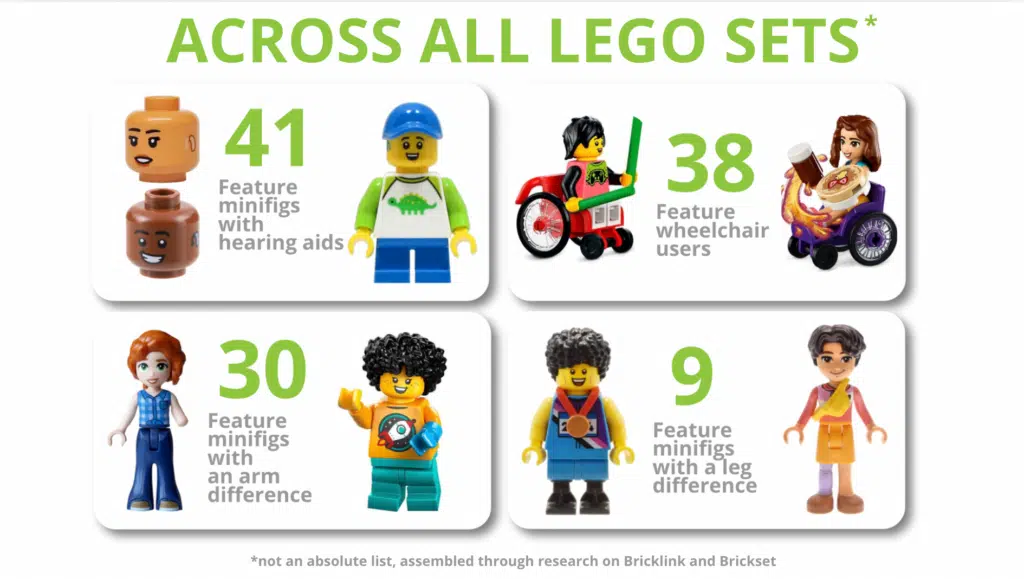
Minifigs with hearing aids and limb differences are also widely featured in LEGO sets. Notably, LEGO does not represent all limb differences the same. While LEGO features many minifigures and minidolls that wear prosthetic arms or legs, LEGO includes some that don’t. One of these is the Friends minidoll Autumn, who typically does not wear a prosthetic arm unless she is doing physical activity. LEGO also features many types of prosthetics. There are several prosthetic leg prints, including Petch’s transfemoral (above-the-knee) prosthetic and the Series 25 Paralympic Athlete with transtibial (below-the-knee) running blades (both pictured below).
Over recent years, LEGO has continued to expand their disability representation. A few exciting newer and less common appearances are characters with ostomy bags, glucose monitors, cochlear implants, and Down syndrome.
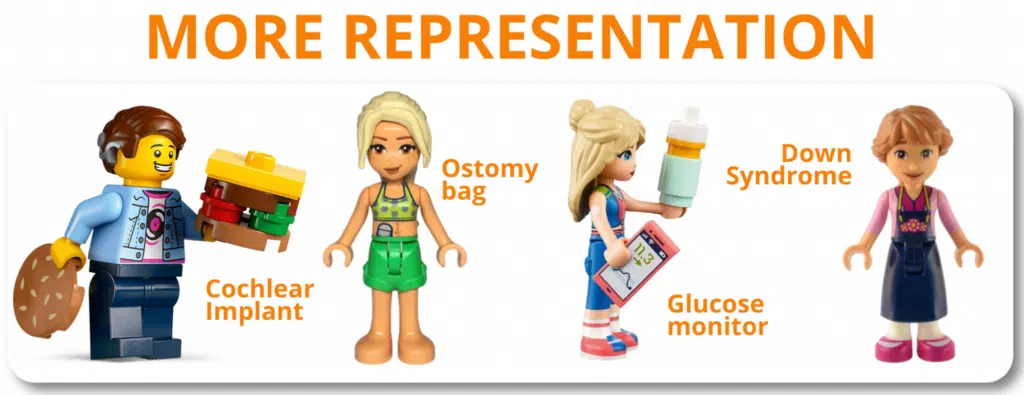
Almost two-thirds of all characters with disabilities appear in the LEGO City and Friends lines. Many of the lesser-represented disabilities, such as those pictured above, appear in the Friends line. LEGO City, on the other hand, tends to have minifigures with more common disabilities. The graph below shows the full breakdown of the Friends minidolls and City minifigures with disabilities.
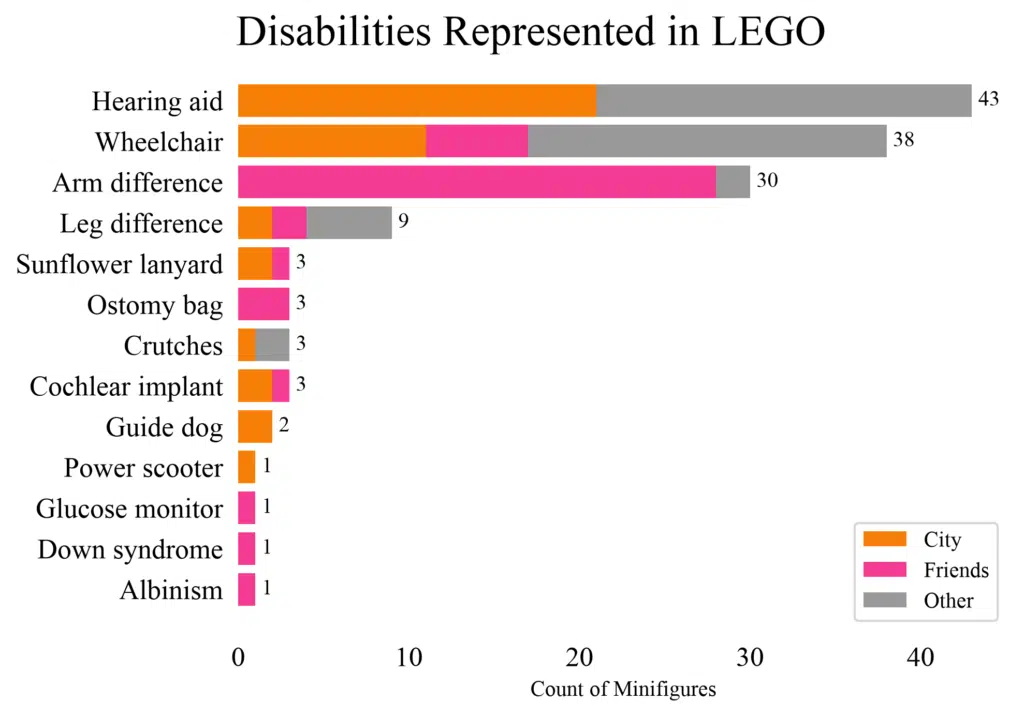
LEGO has also made strides in promoting awareness of non-visible disabilities through their partnership with Hidden Disabilities Sunflower. LEGO represented these disabilities with printed sunflower lanyards, as in the disability community, a sunflower is a discreet sign that the wearer has a non-visible disability.
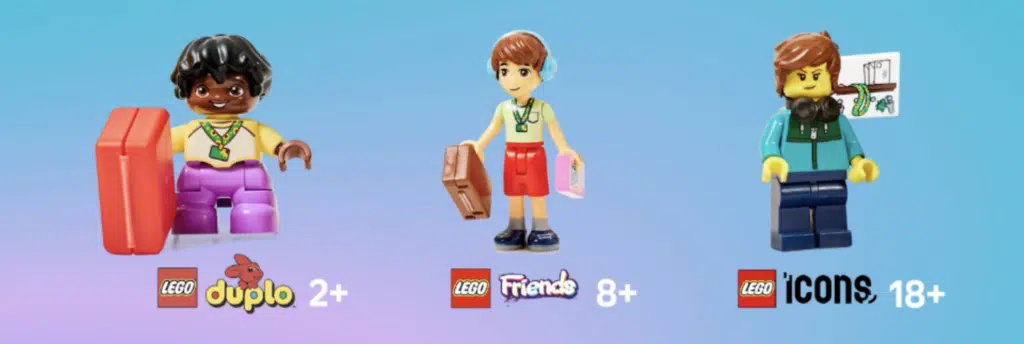
We were thrilled to find so many instances of disability representation throughout LEGO. Unfortunately, this representation is unequally distributed across flesh tones. Minifigs and minidolls with lighter or white-coded flesh tones make up the vast majority of all characters with disabilities. The lack of intersectional representation is incredibly problematic, and minifigures/minidolls with darker flesh tones and disabilities should be equally represented.
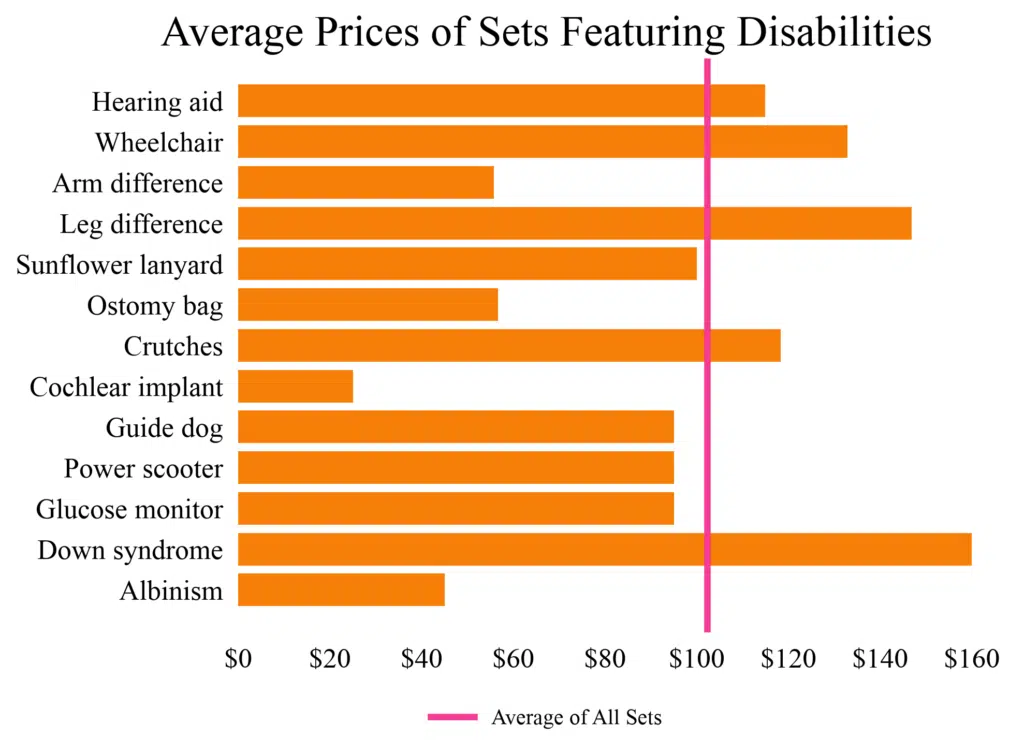
A further disappointing aspect of LEGO’s disability representation is the high price barrier, which prevents easy access to these sets. The average price for all LEGO sets featuring minifigs with disabilities is $102. Some sets with disabilities such as down syndrome and leg differences average well above that. However, LEGO has increasingly included minifigures with disabilities in cheaper sets, especially with the Autumn in the Friends line. We would love to continue to see an even greater increase in accessible representation.
Not only would we like the sets to be more accessible, we would love for builders to easily find disability-related accessories and minifigs to use in their own creations. Unfortunately, it is difficult to find these pieces on BrickLink and Brickset. For example, the Friends Hanna minidoll has a glucose monitor and adhesive patch on her arm, but the BrickLink description does not mention it. If a builder wanted to include a minifigure with this disability, they would need outsider knowledge to be able to find the minidoll or torso piece. Because of these inconsistencies, the list that we have developed may not be a comprehensive list.
Below, we have linked our list of all the sets (and CMFs) we found that feature a minifig with a disability. Feel free to look through the list to browse for your next LEGO set, find a disability related accessory to include in your next build, or to suggest anything that we may have missed!